China’s Women High Heel Boots industry combines traditional shoemaking with modern production technology. Factories in Zhejiang, Guangdong, Sichuan, and Fujian serve both domestic and international buyers. Their strengths often include private-label development, flexible order volumes, material selection, and export experience.
This guide, “China Top 10 Women High Heel Boots Manufacturers,” examines suppliers through practical criteria. These include factory capability, sample development, leather and synthetic material quality, heel stability, stitching accuracy, packaging, and delivery performance. A reliable manufacturer should provide clear specifications, production samples, quality inspection records, and responsive communication. Small details matter. Clean edge painting matters. So does balanced weight distribution.
Footwear designer Manolo Blahnik once said, “You put high heels on and you change.” That idea reflects both fashion appeal and manufacturing responsibility. Women High Heel Boots must look elegant, yet remain stable during ordinary movement. Experienced buyers should check heel attachment, outsole grip, lining comfort, zipper strength, and size consistency. Factory photos alone cannot prove quality. Independent inspections and physical samples offer stronger evidence.
The selected companies may differ in scale, specialization, and export markets. No ranking is permanently perfect. A large factory may offer capacity but less flexibility. A smaller supplier may provide careful sampling but face production limits. Buyers should verify current certifications, material claims, labor practices, and delivery records before signing contracts. This overview is a practical starting point, not a substitute for due diligence. Trends change quickly. Foot comfort should never become an afterthought.
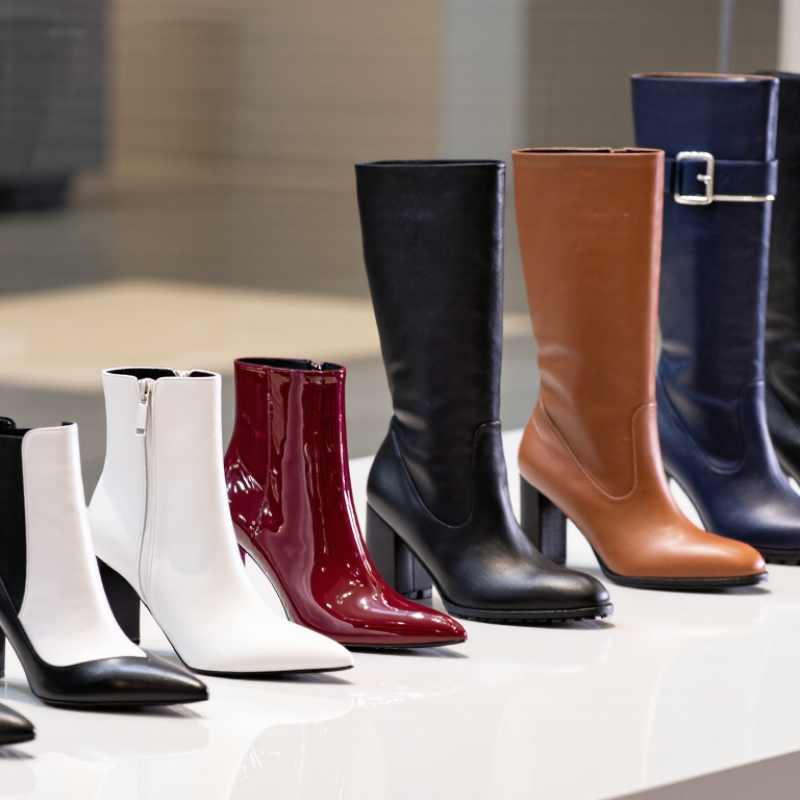
Women’s high heel boot manufacturers in China are more than contract factories. They are product developers, material buyers, sample makers, and quality-control partners. Their work covers heel stability, shaft fitting, leather or synthetic selection, outsole grip, packaging, and export documentation. A reliable manufacturer should provide traceable materials, measured samples, and repeatable production records.
Market data shows why this role matters. Grand View Research valued the global women’s footwear market at approximately US$193 billion in 2023, with continued growth expected through 2030. Fortune Business Insights also estimated the global footwear market at about US$457 billion in 2023. These figures do not isolate high heel boots, but they indicate strong demand for specialized footwear manufacturing. China’s advantage comes from dense supplier networks, skilled pattern technicians, and scalable production capacity.
For a China top 10 list, factory size should not be the only measure. Buyers should examine sample accuracy, heel-load testing, defect rates, minimum order quantities, and communication speed. Euromonitor industry analysis repeatedly identifies comfort, durability, and design adaptability as important footwear purchase factors. That creates pressure on manufacturers to balance fashion with foot support. Some factories still overstate customization abilities. That deserves scrutiny. A beautiful sample can hide weak stitching or unstable heels. Practical audits, production photos, and independent inspections remain useful before large orders. Supplier quality can vary sharply, even within the same manufacturing region.
| Rank | Anonymous Manufacturer Profile | Primary Manufacturing Focus | Typical Heel Height | Common Upper Materials | Typical Production Model | Common Compliance Requirements | Principal Market Role |
|---|---|---|---|---|---|---|---|
| 1 | Profile A | Fashion-led women’s knee-high and over-the-knee boots | 7–12 cm | Cow leather, microfiber, suede-effect textiles, elastic panels | OEM and private-label production with seasonal collections | REACH-related chemical restrictions, material testing, colorfastness, dimensional inspection | Trend and design manufacturing |
| 2 | Profile B | Pointed-toe pumps, ankle boots, and formal high-heel styles | 6–10 cm | Full-grain leather, split leather, polyurethane-coated leather | Small-to-medium batch export manufacturing | Upper-to-sole bonding tests, heel attachment tests, abrasion resistance, restricted-substance checks | Formal and occasion footwear supply |
| 3 | Profile C | Comfort-oriented block-heel and platform boots | 5–9 cm | Soft leather, microfiber, mesh inserts, synthetic stretch fabrics | ODM development with pre-production samples | Flexing durability, slip-resistance evaluation, insole cushioning checks, size grading | Comfort and functional design |
| 4 | Profile D | Private-label boots for department stores and online retailers | 6–11 cm | PU, microfiber, synthetic suede, textile linings | Flexible MOQ production and label customization | Retailer-specific product testing, packaging specifications, barcode and labeling control | Retail and e-commerce supply |
| 5 | Profile E | Western-style, riding-inspired, and stacked-heel boots | 4–8 cm | Oiled leather, suede, nubuck, rubberized components | Medium-volume production with material customization | Leather quality grading, sole wear testing, color migration checks, stitch inspection | Lifestyle and casual fashion |
| 6 | Profile F | Luxury-look high heels and embellished evening boots | 8–12 cm | Premium leather, satin textiles, metallic finishes, decorative crystals | Sample-intensive ODM and limited-run manufacturing | Decoration adhesion, surface durability, metal-component safety, appearance inspection | Premium and occasion segments |
| 7 | Profile G | Stretch-fit boots designed for wider calf and varied leg shapes | 5–9 cm | Stretch textile, microfiber, elastic gussets, synthetic leather | Size-range and fit-focused production | Fit measurement control, elastic recovery testing, seam strength, colorfastness | Inclusive sizing and fit solutions |
| 8 | Profile H | Seasonal fashion boots for autumn and winter collections | 6–10 cm | Leather, PU, fleece or textile linings, TPR and rubber outsoles | Forecast-based bulk production for seasonal launches | Cold-weather material evaluation, sole adhesion, lining inspection, carton and moisture control | Seasonal mass-market supply |
| 9 | Profile I | Lower-impact and recycled-material high-heel footwear | 5–9 cm | Recycled polyester textiles, water-based synthetic materials, certified leather options | Material-led development with traceability documentation | Supplier declarations, recycled-content verification, chemical compliance, packaging reduction checks | Sustainability-oriented production |
| 10 | Profile J | Export-oriented mixed collections for multiple international markets | 4–11 cm | Leather, PU, microfiber, textile uppers, rubber and TPR soles | Multi-style OEM production with quality-control checkpoints | Destination-market labeling, product safety documentation, carton testing, third-party inspection | Global sourcing and market adaptation |
They develop products, source materials, make samples, and manage production quality. Their work includes heels, shafts, linings, outsoles, packaging, and export documents.
Request physical samples before placing a large order. Check heel alignment, stitching density, zipper movement, outsole bonding, and lining comfort. Test carefully.
Bend the boots repeatedly and walk in them. Check heel balance, outsole grip, seam strength, and size consistency. A beautiful sample can still fail.
Discuss leather, synthetic materials, suede, stretch fabrics, linings, and outsole compounds. Ask for material certificates and traceable batch numbers. Do not rely only on photographs.
Not necessarily. A factory producing thousands of pairs daily may struggle with small, detailed orders. Capacity numbers need practical evidence.
Guangdong often supports fast samples and decorative uppers. Zhejiang has mature leather shoe and sole suppliers. Sichuan supports detailed finishing, while Jiangsu offers organized production systems.
Review production records, worker training, fire safety, working conditions, environmental procedures, and material storage. Ask whether stitching and key processes happen in-house.
A trial order reveals real size grading, delivery control, stitching quality, and communication speed. It may cost more per pair. That is an acceptable trade-off sometimes.
Confirm sample revisions, packaging details, inspection dates, and shipment plans in writing. Keep a backup supplier. Even capable factories can miss deadlines.
China’s Women High Heel Boots manufacturers play an important role in the global footwear supply chain by combining large-scale production, flexible development, and competitive pricing. This article explains how to evaluate leading suppliers through factors such as manufacturing experience, production capacity, design expertise, material selection, sample development, and responsiveness to customer needs. It also highlights major footwear production regions in China, each offering different strengths in craftsmanship, technology, supply networks, and export services.
The overview covers various product categories, including ankle boots, knee-high boots, over-the-knee styles, platform designs, and seasonal fashion collections. It also examines commonly used materials, customization options, packaging support, and private-label production services. In addition, buyers can learn how quality control systems, product testing, responsible compliance practices, transparent pricing, minimum order quantities, delivery management, and international logistics capabilities influence supplier selection. These criteria help importers and retailers identify reliable partners for consistent, stylish, and market-ready Women High Heel Boots.

 Q.L. CODEX