Choosing High Heels High Boots for global buyers requires more than following seasonal colors. It demands evidence, fit knowledge, and careful supplier evaluation. The global high heels market reached approximately USD 34.5 billion in 2023, according to IMARC Group’s market report. Its forecast suggests steady growth through 2032. Grand View Research also identifies premium design, online retail, and changing consumer lifestyles as important market drivers.
These figures show opportunity, but they do not guarantee product success. A buyer should examine heel stability, shaft height, toe shape, lining materials, and outsole grip. Imagine a customer walking across wet stone in a 100-millimeter heel. A smooth outsole may create discomfort or safety concerns. Calf measurements also vary widely between regions. European, North American, and Asian buyers may need different size grading and boot openings.
Christian Louboutin said, “A shoe has so much more to offer than just to walk.” His observation reflects the emotional value of footwear, but comfort still determines repeat purchases. Buyers should request physical samples, test zipper movement, and inspect stitching under bright light. Supplier audits should include material traceability, quality controls, packaging strength, and documented compliance practices. Certifications alone are not enough.
No guide can remove every compromise. A dramatic silhouette may reduce daily wearability. A softer leather may increase cost and require better protection. Even expert selection can miss local preferences. Therefore, this article will compare style, comfort, construction, sizing, pricing, and regional demand. It will help global buyers make clearer decisions, while recognizing that “high fashion” is not always the same as practical value.
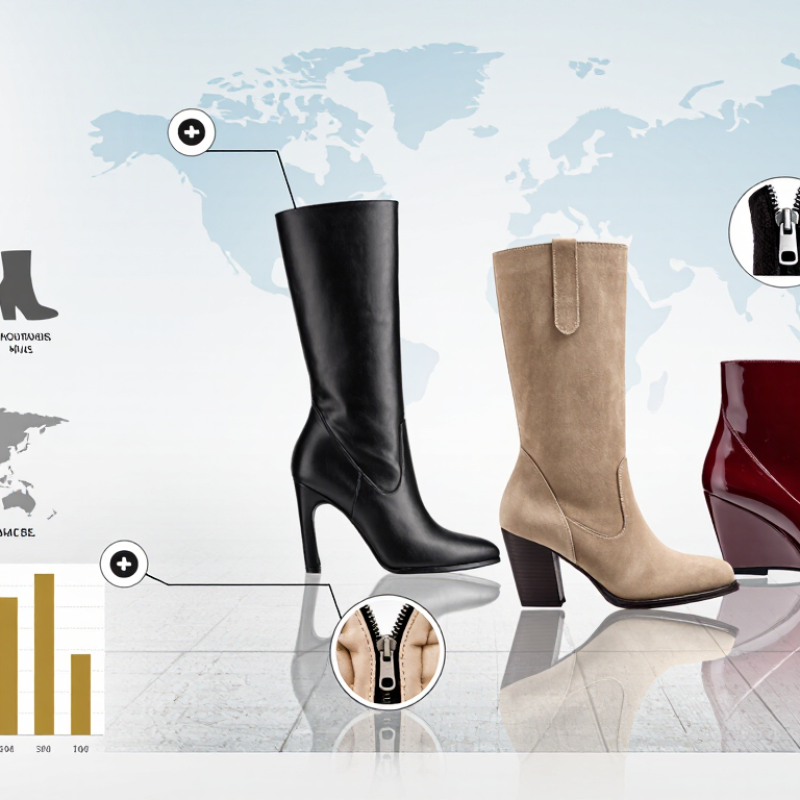
Global footwear production reached 23.9 billion pairs in 2023, according to World Footwear. This figure shows a crowded, highly competitive market. It also reveals a major sourcing question: who will wear the boots, and where?
High heel boots should match local habits, climate, and spending power. A buyer serving colder cities may need insulated lining, stable heels, and slip-resistant soles. Customers in warmer regions may prefer lighter materials and shorter shafts. Heel height matters too. A 10-centimeter heel can attract attention, but it may increase discomfort and returns. Demand is not only about appearance.
Measure it carefully. Review regional sales data, search behavior, competitor pricing, and return reasons before placing large orders. Request samples in several sizes. Check ankle pressure, zipper strength, shaft width, stitching, outsole grip, and color consistency. I have found that a beautiful sample can fail during long walking tests. That lesson is easy to ignore.
Keep the first order limited. Compare customer feedback across markets, then adjust the heel shape, toe room, and boot opening. Product descriptions should state materials, heel height, care needs, and fit clearly. Local labeling and consumer safety requirements also need professional review. A spreadsheet may show demand, yet real buyers can still surprise you. That uncertainty deserves attention.
How to Choose High Heels High Boots for Global Buyers?
For international buyers, ISO 19407:2015 offers a reliable basis for converting footwear sizes across regional systems. It helps connect foot-length measurements with common size labels, reducing confusion between European, UK, US, and other markets. However, a conversion chart is not a perfect fit guarantee. Measure carefully.
High heels and high boots need more than length. Buyers should record foot length while standing, preferably wearing the socks used with the boots. Check the toe shape, heel height, arch position, and internal width. A narrow pointed toe may require extra room, even when the converted length appears correct. For boots, measure calf circumference and shaft height as well. These details can determine whether the zipper closes smoothly or presses against the leg.
Suppliers should state their measurement method and provide a clear tolerance, such as a small difference in insole length. Ask for a physical sample before placing a large order. Compare the sample with the ISO-based size chart, then test walking, stair use, and standing for several minutes. Fit is personal. Foot shape varies by region and by individual, so standard conversion should guide decisions, not replace inspection. One practical weakness remains: buyers may trust labels too quickly. The last shape, material flexibility, and heel pitch can change comfort significantly, even when the measured size is correct.
Indicative women's footwear size conversion based on foot length and ISO 19407:2015 principles
| Foot Length (cm) |
Mondopoint (mm) |
EU Size (Approx.) |
UK Size (Approx.) |
US Women's Size (Approx.) |
High-Heel Boot Fitting Guidance |
|---|---|---|---|---|---|
| 22.0 | 220 | 35 | 2.5 | 5 | Check that the heel remains secure without lifting. |
| 22.5 | 225 | 36 | 3.5 | 5.5 | Allow the toes to lie flat rather than being compressed. |
| 23.0 | 230 | 37 | 4 | 6.5 | Measure both feet and use the longer foot for size selection. |
| 23.5 | 235 | 37.5–38 | 4.5 | 7 | A rounded or wider toe box can reduce pressure caused by the inclined foot position. |
| 24.0 | 240 | 38 | 5.5 | 7.5 | The instep should be supported without creating numbness or excessive pressure. |
| 24.5 | 245 | 39 | 6 | 8.5 | Confirm that the heel counter supports the rear of the foot securely. |
| 25.0 | 250 | 40 | 6.5 | 9 | For closed boots, leave practical toe clearance; the toes should not touch the front. |
| 25.5 | 255 | 40.5–41 | 7.5 | 9.5 | Check the forefoot width at the ball of the foot, especially for pointed styles. |
| 26.0 | 260 | 41 | 8 | 10 | Measure calf circumference at the widest point for tall high-heel boots. |
| 26.5 | 265 | 42 | 8.5 | 10.5 | Compare shaft height and calf circumference with the actual product measurements. |
| 27.0 | 270 | 43 | 9.5 | 11 | Use the larger size only when the longer foot or foot width requires it; avoid excessive heel slip. |
Measurement and purchasing notes
Choosing high heel boots for global buyers should begin with comfort, not appearance. The American Podiatric Medical Association recommends heels no higher than 2 inches. This limit can reduce pressure on the forefoot, ankles, and lower back. It is a practical screening point, not a complete medical rule.
A lower heel may still feel unstable if the sole is stiff or narrow. Check the heel position, toe space, and ankle support. The foot should not slide forward when walking. Try boots with everyday socks, especially in colder climates. I once focused too much on heel height and overlooked poor arch support. That was a costly mistake in comfort.
Tips: Measure both feet at the end of the day. Choose the larger foot’s size. Walk on a clean, firm surface for several minutes. Look for a padded insole and a stable heel base. Buyers ordering across countries should compare size charts carefully. Width standards can differ between markets. Ask suppliers for material details, heel measurements, and wear-test information. A beautiful boot can still fail after one long day.
When selecting children’s high heel boots, safety must guide every design decision. In the United States, CPSIA sets a 100 ppm total lead limit for accessible component parts. This includes metal buckles, decorative studs, zipper pulls, and painted surfaces. A boot may look attractive, yet hidden details can create compliance concerns. Experienced buyers should request material specifications before approving samples.
Tips: Ask for component-level lead testing from a qualified laboratory. Check whether the report matches the exact production materials. Review children’s product certificates and keep supplier records. Do not rely only on a general factory statement. It sounds convenient, but it may be incomplete.
Global buyers should also examine heel stability, sharp edges, small detachable decorations, and material durability. A low heel can still twist on smooth floors. Soft lining, secure fasteners, and accurate size grading improve everyday safety. Supplier audits and random production inspections add practical evidence. Still, no checklist catches everything. A decorative change after testing can affect the result. Reconfirm compliance whenever colors, coatings, metal parts, or suppliers change. Document each decision clearly, even when the order is small. Reliable sourcing requires patience, technical review, and honest questioning.
Export quality begins before the cartons leave the factory. For high heel boots, buyers should define measurable requirements for leather appearance, shaft height, heel stability, zipper function, and outsole bonding. ANSI/ASQ Z1.4 provides a practical sampling framework for this work. It helps teams select samples according to lot size, inspection level, and agreed AQL limits.
Use separate defect categories. Critical defects may involve unsafe heel attachment or sharp internal materials. Major defects can include broken zippers, severe surface damage, incorrect sizing, or sole separation. Minor defects may involve light wrinkles, small color differences, or uneven stitching. The buyer and supplier should agree on AQL values before production starts. AQL is not a promise of zero defects. It is a risk-based acceptance method.
During inspection, pull random pairs from different cartons, sizes, colors, and production sections. Check heel balance on a flat surface. Open and close each zipper several times. Measure shaft circumference and boot length against the approved specification. Record photos beside the inspection report. Small details matter. I have seen attractive samples fail because packed boots carried different heel heights.
An inspection plan can still miss isolated problems. That limitation deserves honest discussion. For expensive styles, buyers may add 100% checks for critical components, even when sampling passes. Repeated failures should trigger tightened inspection, corrective action, and another review of the factory process. A clear plan protects both product consistency and purchasing decisions.
Global footwear production reached 23.9 billion pairs in 2023. Competition is intense. Buyers must identify suitable customers before ordering boots.
Study climate, walking habits, income levels, and local style preferences. Cold regions may need insulation and slip-resistant soles. Warmer areas may prefer lighter materials and shorter shafts.
No. A 10-centimeter heel may attract attention but increase discomfort and returns. Heel height should match walking conditions and customer expectations. Appearance alone can mislead.
Review regional sales, online searches, competitor prices, and return reasons. Request samples in several sizes. Test ankle pressure, zipper strength, shaft width, stitching, grip, and color consistency.
A small order reduces risk while revealing real customer reactions. Compare feedback across markets. Adjust the heel shape, toe room, or boot opening when needed. Spreadsheets cannot predict everything.
Check heel stability, sharp edges, detachable decorations, fasteners, lining, and size accuracy. Low heels can still twist on smooth floors. Safety needs more than attractive pictures.
Request component-level testing from a qualified laboratory. Review metal buckles, zipper pulls, painted surfaces, and decorative parts. In the United States, applicable children’s rules limit accessible lead to 100 parts per million. Confirm the report matches actual production materials.
Define requirements for heel stability, shaft height, zipper function, appearance, and sole bonding. Pull random pairs from different cartons, sizes, colors, and production areas. Keep photographs with the inspection report.
Critical defects may include unsafe heel attachment or sharp internal materials. Major defects may involve broken zippers, incorrect sizing, or sole separation. Minor defects can include light wrinkles or uneven stitching. Categories should be agreed before production.
No. Sampling manages risk; it does not promise zero defects. Expensive styles may need full checks for critical components. A checklist is never perfect. Reconfirm testing after material, color, coating, or supplier changes.
Choosing High Heels High Boots for global buyers requires a balance of market demand, comfort, safety, and export quality. With 23.9 billion pairs of footwear produced in 2023, buyers should first define their target customers, climate, usage scenarios, materials, and preferred styles. Accurate sizing is equally important, so international size conversions should be standardized with guidance from ISO 19407:2015. Heel height also deserves careful screening, as lower heels generally support better comfort and stability; the APMA recommends keeping heels at or below 2 inches for regular wear.
For children’s boots, buyers should request reliable material testing and verify that total lead content meets the 100 ppm limit established by the CPSIA. Before shipment, suppliers should apply ANSI/ASQ Z1.4 sampling procedures and clearly defined AQL plans to inspect appearance, stitching, sizing, sole attachment, packaging, and functional performance. Combining these measures helps global buyers select stylish High Heels High Boots while reducing quality risks and creating a more consistent purchasing process.

Q.L. CODEX