High Heels And Boots often share leather, stitching, and polished finishes. Their similarities can hide important differences. High heels prioritize elevation, posture, and visual length. Boots prioritize coverage, stability, and protection around the foot and lower leg.
The global footwear market reached approximately $454.5 billion in 2023, according to Fortune Business Insights’ Global Footwear Market Report 2024. Its analysis also identifies changing lifestyles, fashion cycles, and comfort expectations as major market influences. Grand View Research reports that the global footwear market may continue expanding through 2030. These figures show strong demand, but they do not explain how each shoe performs on a real street.
Heel height changes pressure distribution across the forefoot. A boot’s shaft can add warmth, ankle support, or unwanted stiffness. Dr. Hillary Brenner, a podiatric surgeon and former president of the American Association for Women Podiatrists, has stated, “High heels are not meant to be worn all day.” That advice matters when comparing a narrow pump with a supportive, low-heeled boot. Still, comfort depends on fit, construction, walking habits, and individual foot shape. One label cannot predict every experience.
This guide examines High Heels And Boots through design, function, comfort, materials, and occasion. It considers why a pointed toe may feel restrictive. It also explains why a boot can feel secure yet become heavy. The comparison is not absolute. Fashion can challenge comfort. Personal preference can challenge expert advice. Readers should inspect fit carefully, walk slowly, and notice pressure before choosing either style.
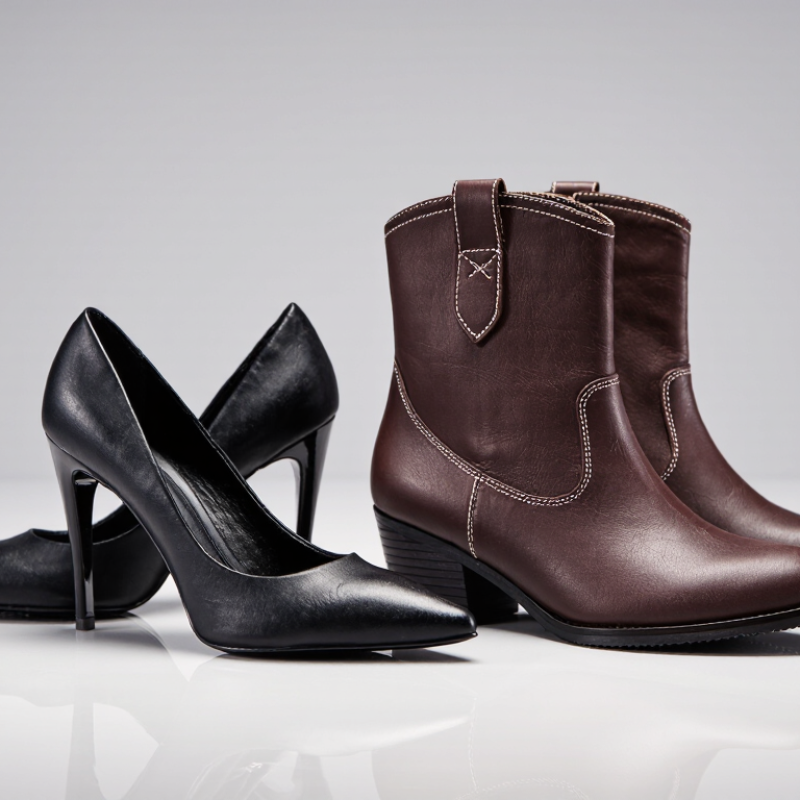
High heels and boots serve different basic purposes, although some designs overlap.
High heels are shoes with raised heels that change the foot’s angle and add height. Their main purpose is appearance, posture, and a more formal visual line. They may suit ceremonies, offices, or evening events. However, heel height, sole shape, and fit strongly affect comfort. A narrow toe box can create pressure after only an hour.
Boots cover more of the foot and usually reach the ankle, calf, or knee.
Their basic purpose is protection, warmth, and stability. Leather, textile, or waterproof materials can shield feet from cold ground, light rain, and rough surfaces. Some boots also include heels, but their construction often provides more ankle support than ordinary high heels. In my experience, this support helps on uneven sidewalks. It does not make every boot comfortable.
Tips:
Choose the shoe for the setting and walking distance. Measure both feet late in the day, when they may be slightly larger. Walk indoors for several minutes before wearing new footwear outside. Check whether your toes can move freely. I once ignored that detail and regretted it before lunch. For high heels, begin with a lower heel and a wider base. For boots, check the ankle opening and wear the socks you normally use. Comfort is not a minor feature. It is part of a practical fit.
What Is the Difference Between High Heels and Boots?
High heels are defined mainly by their raised heel and angled foot position. Their structure usually includes a low-cut upper, a separate heel, and limited ankle support. Boots use a taller shaft that covers the ankle, calf, or knee. Their design often includes thicker soles, stronger counters, and more material around the foot. In simple terms, heels change elevation, while boots increase coverage.
Height affects balance and pressure. A slim, high heel concentrates weight beneath the forefoot. The American Podiatric Medical Association’s 2014 Women’s Foot Health and Fashion Survey reported that 71% of women experienced foot pain while wearing high heels. Boots can also create pressure, especially when their shafts restrict the calf or when heavy soles reduce flexibility. Yet a low-heeled boot may feel more stable than a tall pump. This is not an absolute rule. Fit still matters more than appearance.
Tips: Measure both feet late in the day. Try shoes with the socks you normally wear. Check whether your toes can move freely. A firm heel counter should hold the rear foot without rubbing. The International Organization for Standardization’s ISO 19407 guidance also reminds shoppers that sizing conversions vary between systems. Do not trust the printed size alone. Walk on a hard floor for several minutes. Notice slipping, pinching, and pressure under the ball of the foot. Small discomfort can become a serious fitting problem.
High heels are defined mainly by heel height and angle, not by coverage. They may be pumps, sandals, or ankle shoes. Boots usually cover the ankle or extend higher, but they can have flat, low, or high heels. A tall boot can therefore be both a boot and a high heel. The distinction is not always clean.
Materials influence comfort, durability, and maintenance. Smooth leather often softens with wear, while suede feels flexible but marks easily. Synthetic materials can resist light moisture, though they may trap heat. Rubber outsoles improve grip, especially on wet pavement. Textile linings reduce friction around the foot. I once judged a shoe by its soft upper and ignored the stiff lining. That was a mistake.
Construction reveals more than appearance. High heels need a stable heel attachment, a supportive shank, and a carefully shaped toe box. Boots also require a structured shaft, secure seams, and a closure that does not pinch the calf. A narrow heel can shift weight toward the forefoot. A thick sole may absorb impact but reduce ground feedback. Check the heel for movement before wearing the shoe outdoors. Small gaps around the sole can grow quickly. Decorative buckles, zippers, stitching, and pointed toes are common design features, yet they can affect fit. Fashion sometimes wins. Feet notice later.
What Is the Difference Between High Heels and Boots?
Typical Uses, Comfort Levels, and Practical Considerations
High heels elevate the heel and shift body weight toward the forefoot. They often suit formal events, office clothing, or short periods of standing. Boots can have flat, low, or raised heels, so their uses vary widely. Ankle boots work well with everyday outfits, while taller styles add warmth and leg coverage. That difference matters.
Comfort depends on shape, materials, and fit, not only heel height. High heels may increase pressure under the toes and require more ankle control. Boots can feel steadier, but stiff shafts may rub the calf or ankle. I have found that a roomy toe box and cushioned insole reduce discomfort during longer walks. Still, even a supportive pair can become tiring after several hours. Fit comes first.
Practical conditions should guide the choice. High heels may feel unstable on cobblestones, wet floors, or uneven grass. Boots usually offer better protection from cold air and light rain, although not every pair is waterproof. Check the sole grip, heel width, closure, and interior lining before buying. New boots may also need gradual wear indoors. I once trusted appearance too quickly and ignored a hard seam near my ankle. It looked minor, but the irritation grew during a full day outside.
| Comparison Dimension | High Heels | Boots |
|---|---|---|
| Basic Design | Footwear with a raised heel that places the heel noticeably higher than the forefoot. The upper may leave much of the foot exposed. | Footwear that covers the foot and extends above the ankle, with styles ranging from ankle boots to knee-high designs. |
| Typical Heel Height | Commonly about 5–10 cm (2–4 in), although lower and much higher styles are also available. | May be flat, low-heeled, platformed, or high-heeled. The height varies widely by design and intended use. |
| Typical Uses | Often selected for formal events, business outfits, evening wear, ceremonies, and occasions where a dressier appearance is desired. | Used for everyday wear, work, outdoor activities, cold-weather dressing, fashion styling, and protection from wet or uneven surfaces. |
| Foot and Ankle Coverage | Usually provides limited coverage around the foot and little protection for the ankle or lower leg. | Provides more coverage around the foot and ankle; taller versions also cover part or most of the lower leg. |
| Comfort for Extended Wear | Comfort depends on heel height, toe shape, fit, cushioning, and time worn. Higher heels can increase pressure on the forefoot and toes. | Often more suitable for extended wear when the fit is correct and the sole provides adequate cushioning and support. Heavy or rigid boots may still cause fatigue. |
| Walking Stability | Thin or high heels reduce the contact area with the ground and may require more balance, particularly on uneven or slippery surfaces. | Flat or broad-heeled boots generally provide a larger, more stable base. Stability still depends on the sole, heel shape, and terrain. |
| Support and Structure | Support varies considerably. A secure fastening system, padded insole, and wider heel can improve stability and comfort. | Typically offers more ankle structure and a thicker sole, although flexible fashion boots may provide less support than sturdier outdoor designs. |
| Weather Protection | Usually offers limited protection from rain, snow, mud, and cold, especially when the design is open or made from absorbent materials. | Generally provides better protection from cold, wind, and light moisture. Waterproof performance depends on construction, materials, and sealed seams. |
| Performance on Uneven Ground | Less practical on gravel, grass, cobblestones, stairs, and other uneven surfaces because the heel can catch or sink. | Usually more practical on uneven ground, particularly when equipped with a flat, lugged, or traction-focused outsole. |
| Breathability | Open or lightweight styles may allow more airflow around the foot, but enclosed designs can still become warm. | Full-coverage uppers may retain more heat. Breathability depends on the lining, material, ventilation, and season. |
| Ease of Putting On and Removing | Slip-on styles are usually quick to wear, while straps, buckles, or laces require additional adjustment. | Slip-on and side-zip styles are convenient; tall lace-up or fitted boots generally take more time to put on and remove. |
| Dress Code | Commonly associated with polished, formal, or sophisticated outfits, depending on the shape and materials. | Can appear casual, professional, rugged, or formal depending on the height, finish, sole, and styling. |
| Common Fit Concerns | Toe crowding, heel slipping, pressure on the ball of the foot, and rubbing around straps or edges. | Foot width, ankle circumference, calf fit, shaft height, and the amount of room for socks are important considerations. |
| Maintenance | Requires care appropriate to the material; thin heels and delicate uppers may be vulnerable to scratches and surface damage. | Often needs cleaning, conditioning, drying, and occasional treatment for water resistance. Soles and heel taps may require replacement over time. |
| Best Choice for | People prioritizing height, formal styling, and a refined silhouette for occasions involving limited walking or standing. | People prioritizing coverage, versatility, stability, warmth, or protection, especially for commuting and variable weather. |
| Practical Selection Tip | Choose a stable heel, a comfortable toe box, secure fastening, and cushioning when the shoes will be worn for several hours. | Choose the boot height, sole traction, insulation, water resistance, and fit according to the climate, activity, and amount of walking. |
Comfort and practicality depend on the individual design, materials, fit, walking surface, and length of wear.
What Is the Difference Between High Heels and Boots?
Choosing between high heels and boots depends on the occasion, walking distance, and surface. High heels create a sharper, more formal silhouette. They suit ceremonies, presentations, and evening events. However, they can become uncomfortable during long standing periods. The American Podiatric Medical Association’s 2014 survey reported that 71% of women who wear high heels experience foot pain. That figure deserves attention, even when the shoes look perfect.
Boots offer more coverage and often feel steadier on cold, wet, or uneven streets. Ankle boots work well with office trousers and casual dinners. Knee-high styles add warmth and visual structure to dresses. Still, boots are not automatically safer. A narrow toe box, rigid leather, or a poorly fitted shaft can create pressure and blisters. For commuting, travel, or outdoor venues, a low heel and flexible sole usually make more practical sense. For a formal indoor event, heels may still deliver the cleaner line. The choice is not always rational. Appearance sometimes wins.
Tips: Try both shoes late in the day, when feet are slightly swollen. Walk across a hard floor for five minutes. Check whether your toes can move freely. Keep blister cushions nearby. If pain continues, consult a qualified podiatrist rather than relying on fashion advice. Even experienced shoppers misjudge fit occasionally.
High heels raise the heel and shift weight toward the forefoot. Boots may have flat, low, or raised heels.
They suit ceremonies, presentations, office outfits, and evening events. They create a sharper formal silhouette.
Boots work well for commuting, travel, cold streets, and uneven outdoor surfaces. They provide more coverage and stability.
Not always. A stiff shaft, narrow toe box, or hard seam can cause rubbing and blisters.
Look for a roomy toe box, cushioned insole, flexible sole, and suitable heel width. Fit comes first.
Try them late in the day, when feet may be slightly swollen. Walk on a hard floor for five minutes.
No. Cobblestones, wet floors, and uneven grass can make them feel unstable.
Wear them indoors gradually. Check for pressure near the ankle, calf, and toes.
Stop relying only on fashion advice. Consult a qualified foot specialist if discomfort continues.
No. Appearance sometimes wins. I once ignored a hard ankle seam because the boots looked attractive, and regretted it later.
High Heels And Boots are both popular types of footwear, but they serve different purposes and create distinct silhouettes. High heels are designed mainly to elevate the heel, lengthen the appearance of the legs, and add a polished or elegant touch to an outfit. Boots generally provide more coverage, often extending above the ankle, and are made to offer greater protection and support. Their structures may include thicker soles, reinforced uppers, closures, and various heel heights.
Materials such as leather, fabric, synthetic materials, and rubber can be used in both styles, while construction details influence durability, flexibility, and comfort. High heels may be suitable for formal events, celebrations, or stylish professional outfits, though extended wear can cause pressure on the feet. Boots can be practical for cooler weather, outdoor activities, travel, or casual occasions, depending on their design. When choosing between High Heels And Boots, consider the event, weather, walking distance, outfit, and level of support needed.

Q.L. CODEX