How to Source High Heel Ankle Boots Wholesale?

Time:2026-11-04 Author:Isabella
0%

Sourcing high heel ankle boots wholesale is more than comparing prices and choosing attractive product photos. A buyer needs to check materials, construction, sizing, production capacity, and communication before placing a bulk order. A sleek boot can look convincing online, yet feel stiff or unstable when worn. Samples reveal details that listings often miss.

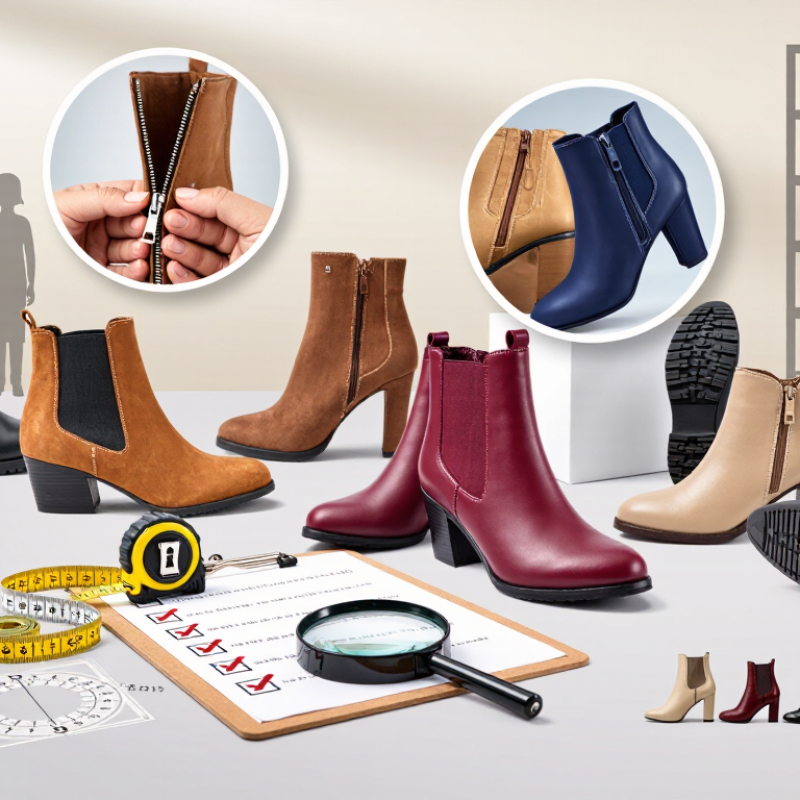
Look closely at the heel attachment, zipper movement, lining, stitching, and sole grip. Ask suppliers for a size chart, material specifications, minimum order quantity, lead time, and clear sample terms. Ankle Boots High Heels should also be assessed across the full size range, since fit and balance can vary between sizes. Request product photos in natural light, but rely on physical samples for a more useful review. Small differences matter.

Supplier checks deserve equal care. Confirm business details, ask how quality checks are handled, and agree on inspection criteria before production begins. Compare quotes only after checking what each one includes, such as packaging, labeling, and shipping terms. A low unit price may not reflect the complete cost. Nor does a polished catalog guarantee consistent quality. Even experienced buyers can miss something; reviewing a sample twice is not wasted effort. This guide explains practical ways to assess suppliers, compare offers, and reduce avoidable surprises when sourcing wholesale high heel ankle boots. The process is not perfect, but careful questions make decisions more dependable.
How to Source High Heel Ankle Boots Wholesale?

Benchmark Supply Against 22.4 Billion Pairs Produced Worldwide in 2023

How to Source High Heel Ankle Boots Wholesale?

Benchmark Supply Against 22.4 Billion Pairs Produced Worldwide in 2023

Worldwide production reached 22.4 billion pairs in 2023. That figure gives wholesale buyers a useful scale benchmark, but it is not a count of ankle boots or high heels. Not a demand forecast. Treat it as context, then assess each supplier’s actual capacity for your style, materials, and order volume.

Ask for recent production records, sample lead times, and a clear minimum order quantity. Check heel stability, zipper movement, lining seams, and sizing across several sample pairs. Request the same checks on a production run, not only on a polished showroom sample. Capacity claims can sound convincing; I would still compare them with delivery history. That extra check may feel slow, but rushing it can leave gaps.

Tips: Send a written specification with heel height, material, color, size range, and packaging details. Confirm how defects are recorded and replacements are handled. Keep one approved sample for comparison. Small details matter.

Define Boot Specs and Apply the EU’s 80% Footwear-Material Labeling Rule

How to Source High Heel Ankle Boots Wholesale?

Define Boot Specs and Apply the EU’s 80% Footwear-Material Labeling Rule

Before requesting quotes, define heel height, shaft height, ankle opening, toe shape, closure, size range, and measurement tolerances. For a 7-centimeter block heel, specify where the heel height is measured and include outsole thickness. Otherwise, suppliers may quote different constructions. The World Footwear Yearbook 2024 estimates global footwear production at 22.4 billion pairs in 2023. That scale makes clear why precise specifications matter; large output does not guarantee consistent quality.

For EU-bound boots, Directive 94/11/EC requires material information for the upper, lining and sock, and outer sole. The 80% threshold applies separately to each component: surface area for the upper and lining/sock, and volume for the outer sole. If no material reaches the threshold for a component, the two main materials must be indicated. Do not judge composition by appearance alone. A coated fabric can be difficult to classify from a product photo.

Request a bill of materials and written confirmation of each component’s composition before approving label artwork. Then compare the label with the production sample and final specification. I still double-check supplier sheets manually; vague descriptions can slip through. A few minutes of review may prevent a whole batch from carrying inaccurate material information.

Compare Factory MOQs, Capacity, and ISO 9001 Quality Systems

How to Source High Heel Ankle Boots Wholesale?

Compare factory MOQs, capacity, and quality systems before discussing price. A low minimum order can suit a trial run, but check whether it applies to every color and size. Ask for the MOQ breakdown in writing. Some factories set separate limits for leather, lining, or sole colors. Small details matter.

Compare stated capacity with the production steps your order needs. Request a monthly output estimate and ask how many lines make similar ankle boots. A line producing 500 pairs daily may still face delays when several orders share cutting or lasting equipment. Ask about peak-season lead times, sample approval, and what happens if materials arrive late. Capacity figures can look neat on paper. They are not a delivery promise.

An ISO 9001 certificate indicates a quality management system, not flawless boots. Check the certificate’s validity and scope, then ask how inspections are recorded. Useful checks include heel attachment, stitching near the ankle, zipper movement, and sole bonding. Request recent inspection examples or a sample quality report. Paperwork helps, but it cannot replace a physical sample. I would compare the factory’s records with the actual pair; that extra check takes time, and it is easy to skip.

How to Source High Heel Ankle Boots Wholesale? — Compare Factory MOQs, Capacity, and ISO 9001 Quality Systems

Factory Profile Typical MOQ per Style / Color Indicative Monthly Capacity ISO 9001 Quality System Best Fit for Buyers What to Confirm Before Ordering
Small production workshop About 100–300 pairs About 1,000–5,000 pairs Certification is supplier-specific. Request a current certificate and verify its scope and issuing body. Small test orders, limited runs, and designs with flexible development needs. Sample lead time, material availability, size-run minimums, and whether the stated MOQ applies to each color.
Mid-sized footwear factory About 300–800 pairs About 5,000–20,000 pairs Ask whether the production site is covered by a valid ISO 9001 certificate; certification should not be assumed. Repeat wholesale orders and buyers seeking a balance between order flexibility and production scale. Monthly capacity available for your delivery window, subcontracted processes, inspection checkpoints, and corrective-action records.
Large-scale factory About 800–1,500 pairs About 20,000–60,000 pairs Verify the certificate holder, site address, validity dates, and whether footwear manufacturing is within the certified scope. Large orders, seasonal replenishment, and established styles with predictable demand. Capacity allocation, minimums by material and color, production-line scheduling, and pre-shipment inspection arrangements.

Planning note: These are indicative sourcing benchmarks, not verified quotations or claims about specific factories. Actual MOQs and capacity vary by construction, heel design, materials, size range, color count, and production schedule. Request a written quotation, a current ISO 9001 certificate, and recent production evidence before placing an order.

Confirm Incoterms, Landed Costs, and HS Codes Before Sampling

Before sampling high heel ankle boots, confirm the Incoterm and named place in writing. Under Incoterms 2020, “FOB” or “CIF” alone is not enough: the named port affects where costs and risks transfer. Ask suppliers to quote the same boot specification under the same term, then compare freight, insurance, duties, brokerage, port charges, and local taxes. UNCTAD’s Review of Maritime Transport 2024 notes that shipping carries over 80% of world trade by volume. Freight changes can quickly alter a boot order’s landed cost.

Check the likely HS classification with a customs broker before approving a sample. Ankle coverage, upper material, and outer sole can affect classification; heel height alone does not settle it. For example, some leather-upper footwear covering the ankle may fall under heading 6403, but national tariff subdivisions and duty rates vary. Request a written classification view for the exact materials and construction. Then calculate landed cost per sellable pair, including packaging and any inspection fees. A neat spreadsheet can still miss local charges.

Tips: Get a pro forma invoice showing the Incoterm, named place, currency, and each cost separately. Verify the HS code against your destination country’s tariff schedule, not a supplier’s guess. Ask for freight quotes before sampling, too. The sample may be affordable; the finished shipment may not be.

Inspect Pilot Orders Using ISO 2859-1 AQL Sampling

A pilot order is a useful place to test more than appearance. Check left-right heel height, ankle opening, zipper movement, sole bonding, and whether both boots sit evenly on a flat surface. The World Footwear Yearbook 2024 estimates that global footwear production reached 22.4 billion pairs in 2023. At this scale, repeatable inspection records help buyers compare factories and spot recurring faults.

For a 500-pair pilot lot, ISO 2859-1’s normal, single-sampling plan at General Inspection Level II uses a 50-pair sample. At AQL 2.5, the plan accepts up to three major defects and rejects the lot at four.

AQL is a sampling index, not permission for a fixed share of defective boots. Select pairs randomly across cartons, sizes, and colors; otherwise, a tidy carton can skew the result.

Record defects by type, photograph failures, and agree in writing which issues count as critical, major, or minor. Check measurements against the approved size chart, not memory. One weakness remains: a sample may miss a rare fault, such as a heel that loosens after wear. For that reason, use wear testing alongside the ISO plan, and keep the inspection sheet with the purchase order.

FAQS

Which boot specifications should buyers define before requesting quotes?

State heel height, shaft height, ankle opening, toe shape, closure, size range, and measurement tolerances. For a 7-centimeter block heel, specify the measurement point and outsole thickness. Small details matter.

How does the EU’s 80% footwear-material rule work?

Check the upper and lining or sock by surface area. Check the outer sole by volume. Each component has its own 80% threshold. If no material reaches it, identify the two main materials.

What material information should buyers request from suppliers?

Request a bill of materials and written confirmation of each component’s composition. Compare the details with the production sample and final specification before approving label artwork. Photos alone can mislead.

How should buyers compare minimum order quantities?

Ask whether the minimum applies to each color and size. Request a written breakdown, since materials or sole colors may have separate limits. A low minimum can still hide restrictions.

How can buyers assess a factory’s production capacity?

Ask for estimated monthly output and the number of lines making similar boots. Confirm peak-season lead times and plans for late materials. Capacity figures are not delivery promises.

What does an ISO 9001 certificate tell buyers?

It indicates a quality management system, not flawless products. Check its validity and scope, then review inspection records. Paperwork is not enough.

What should a pilot-order inspection cover?

Check heel height on both boots, ankle openings, zipper movement, sole bonding, and balance on a flat surface. Record defects by type and photograph failures. Compare measurements with the approved size chart.

How does AQL sampling work for a 500-pair pilot lot?

Under the stated ISO 2859-1 normal, single-sampling plan at General Inspection Level II, inspect 50 pairs. At AQL 2.5, accept up to three major defects; reject at four. Select pairs across cartons, sizes, and colors.

Can sampling catch every boot defect?

No. A sample can miss rare faults, such as a heel loosening after wear. Add wear testing and keep inspection records with the purchase order. I would still worry about the misses.

Conclusion

Sourcing Ankle Boots High Heels wholesale starts with assessing your supply needs against the 22.4 billion pairs of footwear produced worldwide in 2023. Define the boot’s heel height, materials, sizing, construction, colors, and packaging before requesting quotes. For products intended for the EU market, confirm that material labels meet the applicable rule identifying the materials used in at least 80% of the relevant components. Clear specifications help suppliers quote consistently and reduce misunderstandings during production.

Compare factories by minimum order quantities, production capacity, lead times, and documented quality systems such as ISO 9001. Before ordering samples, confirm Incoterms, shipping responsibilities, estimated landed costs, and the appropriate HS codes with qualified trade professionals. Once a supplier is selected, use a pilot order to check workmanship, sizing, labeling, and packaging. An ISO 2859-1-based AQL sampling plan can provide a structured way to inspect the batch and agree on acceptable defect levels before scaling up.


Isabella

Isabella

Isabella is a dedicated marketing professional with a sharp focus on driving brand growth and engagement through strategic content creation. With an extensive background in digital marketing, she combines her passion for storytelling with her keen understanding of industry trends to deliver......